

The first thing I noticed about the Dansko Professional clog was not comfort. It was the noise. On the sealed concrete in the back room of the grocery store where I work, a new pair of clogs announces you. Clop, clop, clop, all the way down aisle seven to the walk-in cooler. My coworker Deb heard me coming for a solid week before she finally said, "Those the Danskos?" They were. She had a pair under her bench in the break room that she had worn for eleven years.
That was two years ago. I am 51 now, deli and bakery manager, 22 years of 10-hour shifts on hard floors, size 8.5 with a slightly wide forefoot. I have worn the Dansko Professional for roughly 5,000 hours across two pairs. This is not a first-week impression. It is the honest accounting of what these clogs did for my feet, what they did not, and why I still think most people standing all day should at least try a pair, even though they are not the right answer for everyone.
The Quick Verdict
A rocker-bottom clog that genuinely reduces the ache in my heels and arches over a 10-hour shift. The break-in is real, the sizing is fussy, and they are heavy. Worth it if you stand all day, less so if you walk miles.
Amazon Check Today's Price →The clog that survived two years of grocery store concrete
Two pairs, 5,000 hours, and my heels still do not ache at the end of a shift. Check the size chart before you buy, because sizing here does not run like a sneaker.
Amazon Check Today's Price on Amazon →How I've Used It
My shift starts at 5:30 AM. For the first two hours I am in the bakery, pulling racks, loading the oven, decorating. Then I move to the deli counter, which means standing in one spot for long stretches, slicing, weighing, wrapping. Then there is the back room, the walk-in cooler, the freezer, the walk back out to the sales floor to check dates. On a normal day I cover all of it, and I am on my feet for the whole ten hours except a 30-minute lunch.
The floor everywhere is sealed concrete. Not tile, not matting, just concrete with a thin sealer on it. If you have ever spent a decade on that surface, you know it does not give. It does not absorb anything. Whatever you wear has to do all the work.
I measured the walking once, out of curiosity, with the step counter on my phone. A normal Tuesday came out a little over four miles, most of it in forty-foot bursts between the deli case, the back room and the front end. That is not a walking job. It is a standing job with walking interruptions, and the distinction matters a lot when you are choosing a shoe. The four miles happen in short trips, and between each trip I am planted at the counter for twenty or thirty minutes at a time.
Behind my counter there is a rubber anti-fatigue mat, about six feet long. It helps. But the mat only covers the spot where I slice. Every time I step to the scale or turn toward the cooler I am back on bare concrete, and I would guess I leave that mat fifty times a day. So the shoe has to be the thing that works, not the mat. That is true for most of us, and it is why I stopped shopping for the cheapest work shoe I could find.
I keep two pairs and alternate days. That was advice from a coworker early on, and it matters more with clogs than with sneakers because the footbed is the whole shoe. Giving a pair a full day to dry out between shifts has kept the leather from getting soft and sloppy and kept the interior from going sour. Pair one is now retired to yard work. Pair two is on its second year and starting to show it.
One note on how I got here. A few years back I had heel pain in my left foot that my doctor called plantar fasciitis. It settled down with stretching, better shoes and rest, and I mention it only as background. I am not going to tell you a clog fixed anything. What I can tell you is what my feet feel like at 4 PM on a Tuesday, and that is the whole basis of this review.
What the Rocker Bottom Actually Does
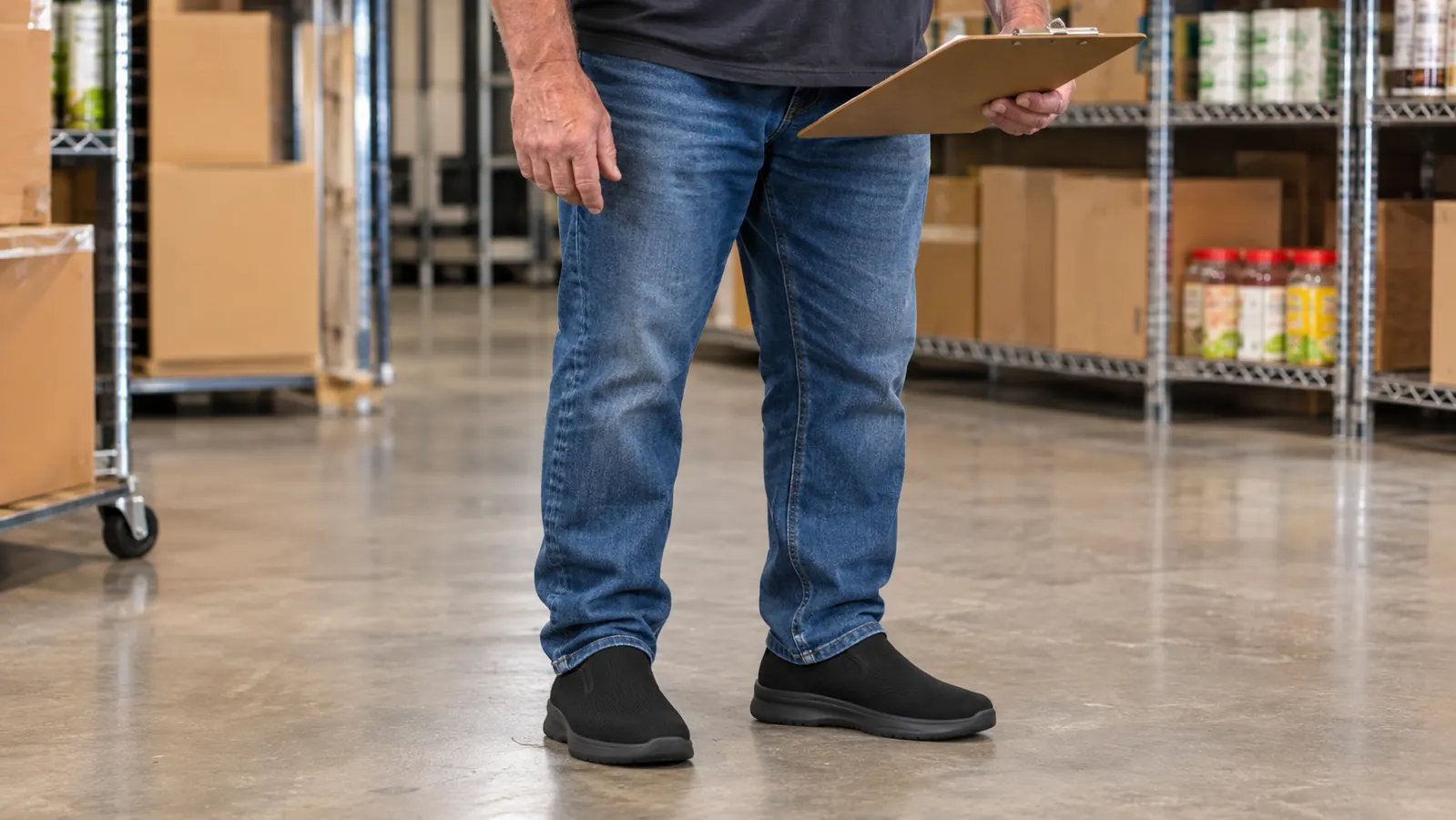
The Dansko Professional has a platform heel and a closed toe, and the sole is stiff enough that it rocks forward as you walk instead of flexing under your foot. That is the whole design idea, and it is the reason these clogs feel strange for the first week and the reason they work for the next two years.
On a flexible sneaker, your foot does the work of every step. Bend, push, bend, push, a thousand times a shift. On the Dansko, the shoe rolls and your foot mostly comes along for the ride. My calves noticed it first. For about five days my lower legs were tired in a new place, the way they get when you switch from flats to a heel. Then that stopped, and what replaced it was a strange, quiet absence of the ache I used to get across the arch by mid-afternoon.
Before these, I wore a pair of lightweight athletic work shoes a coworker swore by. They felt wonderful for about ten weeks. Then the midsole packed down, the heel lost its shape, and I was shopping again, right back where I started. That cycle is what pushed me toward something with a stiff sole in the first place. Soft is not the same as supportive, and on concrete the difference announces itself around month three, usually on a day when you are already tired.
The footbed is firm and it molds. After two years mine has a clear imprint of my toes and a shallow dip under the ball, which sounds unappealing and is actually the point. A footbed that shapes itself to you stops creating a new pressure point every shift. The pull-on closure matters too, more than I expected. No laces to come untied with sanitizer-wet hands, and nothing to step on when I am carrying a tray of rolls through a narrow doorway.
The listing calls these APMA Accepted, which means the American Podiatric Medical Association runs a seal program for footwear. I am not a podiatrist and I am not going to interpret that seal for you. What I will say is that the stiff rocker is the thing you are buying, and it is the thing that either suits your feet or does not.
The leather upper is thick and holds its shape. After two years, with a wipe-down and an occasional conditioner, mine still looks presentable enough that I have worn them to a family dinner without changing shoes. The stain resistant finish has handled spilled soup, sanitizer, and one memorable incident with a quart of blueberry filling.
Break-In, Sizing, and the Honest Downsides
Nobody warned me properly about the break-in, so let me do it. Week one, the top edge of the collar rubbed the outside of my ankle. Not a blister, but a hot spot that made me aware of it every step. Week two, that faded as the leather softened at that seam. By week three they felt like they had always been mine. Two different coworkers told me the same thing happened to them, and one told me she gave up at day nine and returned hers. That is a fair outcome. If you cannot tolerate a rough first week to get to a good year, buy something else.
Sizing is the other trap. These do not run like a sneaker. The footbed is meant to hold your heel with a little lift and slip as you walk, and if you size down to get a snug fit you will lose that and end up with your toes pressed against that closed front. My size 8.5 wide forefoot was fine in my usual size, but I ordered from a place with free returns and I would not buy these any other way. Half sizes exist, whole sizes skip numbers, and one of my coworkers went up a full size from her sneaker size. Try first, or buy where you can send them back.
Sock thickness changed the fit more than I expected. In winter I wear a medium-weight wool crew sock and the clog is snug across the instep for the first hour of the shift. In summer, thin cotton, and there is noticeably more room. If you are between sizes, decide which sock you will actually wear to work and size for that, not for bare feet in a fitting room at two in the afternoon.
I ordered my first pair online from a retailer with free returns and kept the box for three weeks just in case. I did not need it. But I have since recommended that approach to four people in my store, and two of them did end up using it, one for width and one for length. The second pair I bought with confidence and it fit identically, so the sizing at least is consistent from pair to pair.
Weight is real. The listing puts the item weight at 1.5 pounds, and 15 ounces for the product dimension weight. Either way, these are not light. If your job is standing in one spot, you will not care. If your job is walking ten miles a shift around a warehouse, you will care by hour seven.
What I Liked
- The stiff rocker bottom takes load off my arches over a long shift
- Thick leather upper holds shape and cleans up with a wipe
- APMA Accepted per the listing
- Outsole has worn slowly, no chunking or splitting in two years
- Pull-on closure makes a 5:30 AM start easy
Where It Falls Short
- Rough first week while the collar softens
- Sizing is not intuitive and returns matter
- 1.5 pounds per shoe is heavy for walking-heavy jobs
- Not breathable in summer, my feet run hot by August
- No cushioning under the ball of the foot beyond the footbed itself
Week one, the collar rubbed my ankle. Week three, they felt like they had always been mine. One coworker quit at day nine. That is the whole honest story of the break-in.
How They Held Up Over Two Years
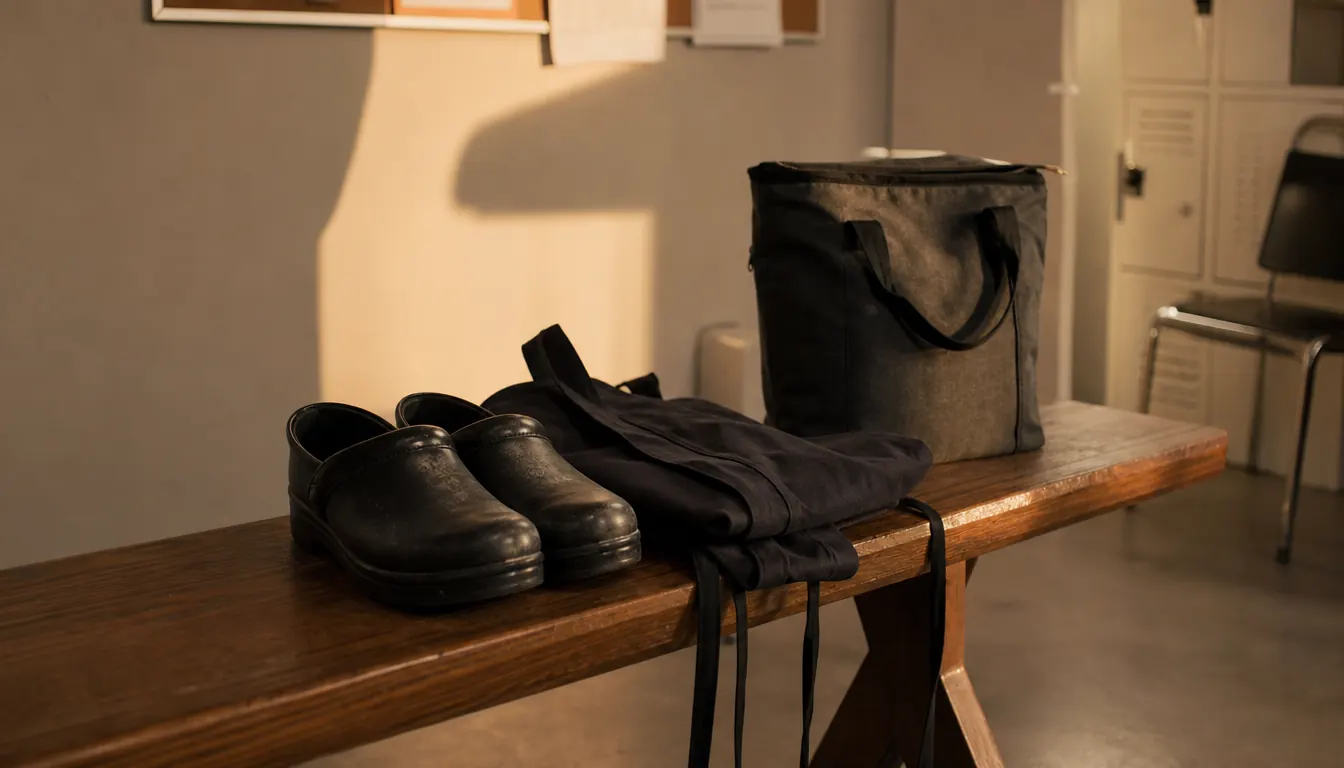
Pair one lasted about 14 months of alternate-day wear before the footbed compressed enough that I could feel the concrete through it. That is the failure point on a clog like this, not the leather and not the outsole. The upper still looked fine. The sole still had tread. But the part that matters, the part under your arch, had flattened out and stopped doing the job. I moved pair one to yard work and started pair two.
At 14 months, pair two is showing the same pattern starting. I expect to get another few months out of it before I rotate it out. That puts the real replacement cycle at roughly one pair per year and a half of daily wear, which is the number to use when you decide whether these are worth it to you. Compare it to how often you replace a cheaper pair of work shoes and the math gets a lot less lopsided than the label might suggest.
The outsole has worn unevenly, heavier on the outside edge of each heel. Deb says that is normal and means I supinate. I have no idea whether that is true and I am not qualified to say. What I know is that the tread at the heel is down to maybe half its original depth at 24 months, while the tread under the ball of the foot is barely touched. That is exactly what you would expect from a job spent standing rather than striding.
The leather has picked up a soft crease across the top of each foot and darkened a shade at the toe. I condition them twice a year with a plain leather cream and wipe them down with a damp rag at the end of every shift, because a deli has a way of getting into everything. That whole routine is maybe five minutes a week, and it is the reason they still look like work shoes instead of something I found in a barn.
What did not happen: no splitting at the sole seam, no blown stitching, no leather cracking, no smell problem despite a job that involves hot ovens and a walk-in cooler. What did happen: the footbed compressed, the leather relaxed a little at the instep, and the outsole edges rounded off. All of that is normal wear for a shoe this stiff.
Who This Is For
You should look seriously at the Dansko Professional if your day is mostly standing in place on a hard surface. Nurses on a unit, cooks on a line, grocery and retail staff behind a counter, hairstylists at a chair. That stiff rocker gives you something to stand on rather than something to flex, and on concrete that is the difference between a manageable ten hours and a long one.
It is also for anyone who has gotten tired of replacing soft-soled shoes every four months because the cushioning flattened. These fail too, eventually, but they fail slowly and predictably, and the upper keeps looking decent the whole way.
Who Should Skip It
Skip the Dansko Professional if your job is walking, not standing. Warehouse pickers, delivery, hospital transport, anyone racking up miles. The weight and the stiff sole work against you there, and you will be happier in a lighter shoe with more flex.
Skip it if you have a very wide foot, since the closed toe leaves less room to spread, or if you are unwilling to gamble a rough first week on a shoe you cannot easily return. Skip it too if you need something you can hose off, because thick leather is not that. And if you want a soft, pillowy shoe out of the box, this is the opposite of that. For those readers, the comparison against a lighter work clog is the better starting point.
One more thing I tell every new hire who asks me about shoes: whatever you buy, buy two pairs and alternate. It doubles the life of both and it is the single cheapest thing you can do for your feet on a concrete floor.
Two years in, I am still buying the same clog
If your shift is mostly standing on concrete, this is the pair I would buy again. Check the size chart carefully and order where returns are free.
Amazon See Current Price and Sizes on Amazon →