

By nine in the morning my feet have already put in more hours than most people's do all day. I manage the deli and bakery at a grocery store in Ogden, Utah. Ten-hour shifts, 5:30 start, five days a week, and the floor under me is sealed concrete from the back room to the walk-in cooler to the register line. Twenty-two years of that.
Here is what I got wrong for most of those years. I kept buying shoes. New pair, better pair, more expensive pair. The shoes were never the whole problem. The problem was the half inch between my foot and the floor. That is the space Dr. Scholl's Work All-Day insoles fill. I have been running a pair through my work shoes, and there are ten specific things they changed about how a shift ends. Not one of them is a medical claim. They are just what a person notices after standing on concrete for a living.
Your shoes are fine. The floor is the problem.
Massaging gel under the whole sole, arch support built for low arches, and Polygiene odor control, in a pair you trim to fit the shoes you already wear.
Amazon Check Today's Price on Amazon →The gel spreads the load across your whole sole
Standing still is harder on your feet than walking, which surprised me when I first heard it. When you walk, the weight moves. When you stand at a slicer, the same two spots take the load for hours. The gel in these spreads that load across more of the sole instead of letting your heel and the ball of your foot absorb all of it. It does not feel dramatic. It feels like somebody turned the floor down a notch.
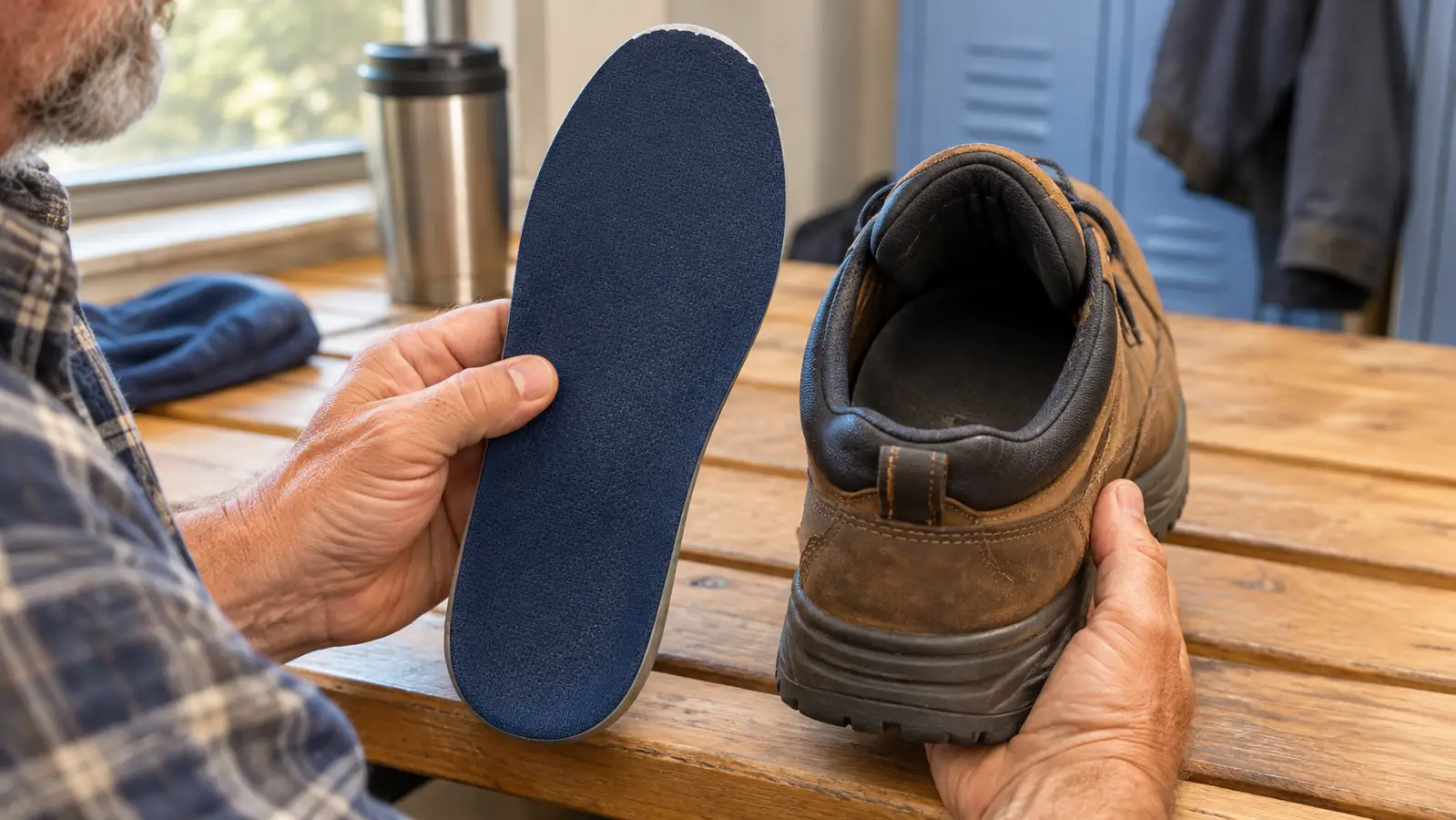
You stop noticing the concrete around hour eight
The change sneaks up on you. Around hour three nothing feels different. Around hour six you are still fine. It is hour eight, the one where I usually start shifting foot to foot at the slicer, where I noticed I wasn't doing it. The floor had not changed. My feet just were not sending up the same complaint. That is the fatigue piece, and it is the reason I kept them in.
Trim to fit means they match your shoe, not the reverse
There is a trim line and you cut along it to your size. I wear an 8.5 with a slightly wide forefoot, and I took my time with the scissors. Cut a little at a time and test the fit before you commit. Get it right and the insole sits flat with no bunching at the toe and no edge riding up under your arch. Rush it and you will feel a ridge. That is on the scissors, not on the insole.
Polygiene keeps the pair from turning on you by Friday
Ten hours in a closed shoe is a warm, damp place, and anything that sits in that five days a week gets rough fast. These carry Polygiene StayFresh, which is there for odor control and to cut down the moisture buildup. Noticeable? Yes, around Thursday, which is when a cheap insole usually starts announcing itself. I still pull mine out at the end of the day and let them air, same as I do with my shoes.
Shock absorption buys your knees some quiet
Your feet are not the only thing taking the hit. Concrete sends the impact straight up. The shock absorption in a gel insole takes some of that before it reaches your ankles and knees. I am 51 and I want to be doing this job at 60 if I choose to. The difference between a floor that gives and a floor that does not is worth paying attention to now rather than later.
The shoes were never the whole problem. The problem was the half inch between my foot and the floor.
The arch support is built for low arches
These are arch support insoles listed for a low arch, which is most of the people I work with. If you have a high, rigid arch, this is not the pair for you and I would say so to your face. For the rest of us, the support runs under the middle of the foot and keeps it from flattening out by hour four, which is when a tired arch starts to ache.
They go into the work shoes you already own
Nobody needs to buy new shoes to try this. Pull the factory insole out if it comes out, drop these in, and you are done. The Dr. Scholl's pair sat flat in a slip-resistant work shoe and in a plain sneaker I wear for the walk in from the parking lot. That matters more than people think. An insole that slides around is worse than no insole at all, and these did not move.
Two pairs of shoes, one pair of insoles, a rotation that works
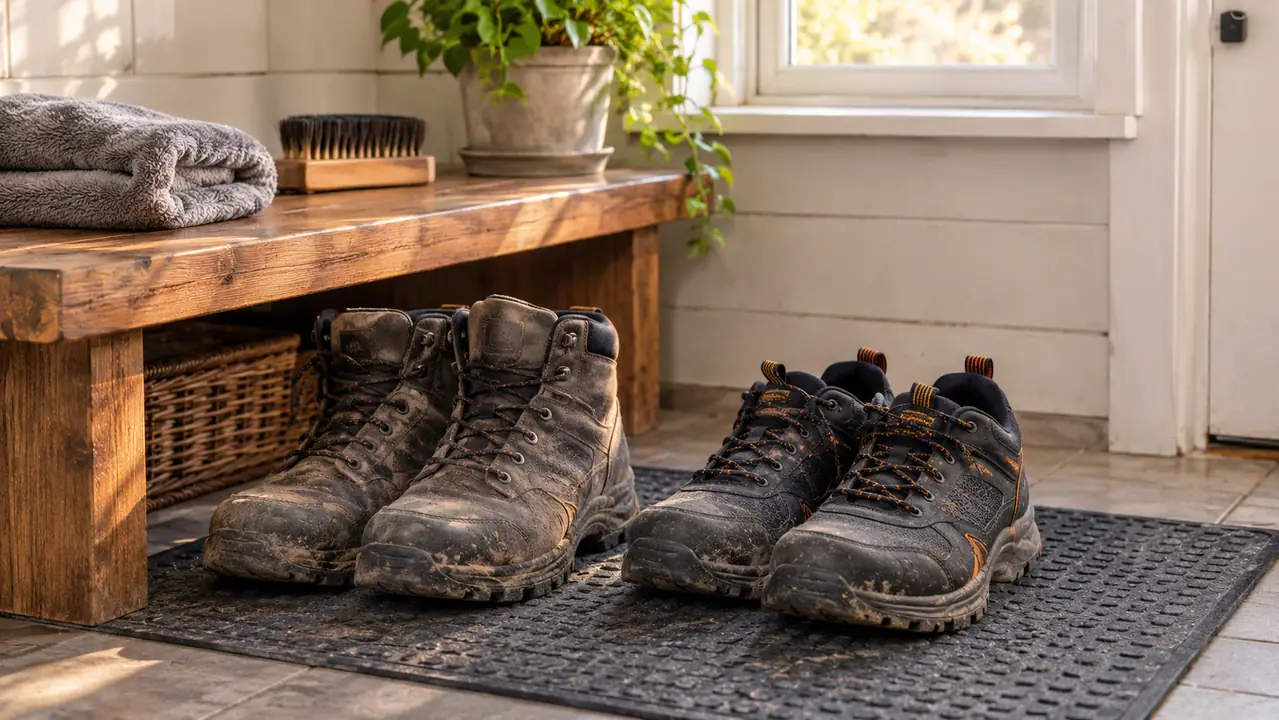
I keep two pairs of work shoes and alternate days so each pair can dry out. That habit is the single best thing I have done for my feet and it costs nothing. The insoles move between them in about ten seconds. If your shoes are damp inside from yesterday, they are not doing you any favors no matter what is sitting in them. Swap, air them out, and let them breathe overnight.
It is a change you can undo in thirty seconds
This is the part I like about trying the smallest thing first. If your feet hate them, you pull them out. No shoes ruined, no appointment booked, nothing to explain to anybody. Compare that with a new pair of work shoes, which is a much bigger decision and, in my experience, often does not fix anything, because the shoes were never the part that was wrong.
Your shift ends and your feet are still yours
The test I use is the parking lot. On a bad day, the walk from the time clock to the car is the longest part of the shift. With the gel under me, that walk is just a walk. I get home and I am not sitting on the edge of the bed rubbing my arches before I take my shoes off. That is the whole thing. Not a transformation. Just a leg of the day that stopped being the worst one.
What I'd Skip
If you are going to skip something, skip the idea that one product fixes a 22-year habit. These do not make concrete soft and they do not replace a decent shoe, stretching, or a night with your feet up. I had heel pain in my left foot a few years back that my doctor called plantar fasciitis. It settled with stretching, better shoes and rest, and no insole did that for me. What Dr. Scholl's does is sit between you and the floor and take some of the load. I would also skip the argument with your own feet about arch height. If your arch is high and rigid, this pair will fight you, and the women's version is cut for a low arch on purpose. What I would not skip is the two-shoe rotation. Buy the insoles, sure, but start with the habit that costs nothing. If you want the longer version of how a pair held up over months of shifts, and how they stack against the pricier brands, both are worth a read before you decide.
Ten hours is long enough without the floor fighting you.
Dr. Scholl's Work All-Day insoles with massaging gel. Trim to fit, arch support for low arches, Polygiene odor control. Move them between the shoes you already own and see what hour eight feels like.
Amazon Check Today's Price on Amazon →