
If you stand on sealed concrete for ten hours, you already know the difference between an insole that feels fine in the shoe aisle and one that still feels fine at hour eight. I manage the deli and bakery at a grocery store in Ogden, Utah. Twenty-two years, five shifts a week, usually a 5:30 a.m. start. I walk the sales floor, the back room, and the walk-in cooler before most people finish breakfast. The Dr. Scholl's Work All-Day insoles are the pair I keep in my rotation. Superfeet is the name coworkers bring up when they want something firmer. Both get called work insoles. They are not the same tool.
For most people who stand all shift and want cushioning, odor control, and no break-in period, Dr. Scholl's is the easier pick. It is a gel insole with a low-arch shape and a trim-to-fit design. It softens the floor and it handles sweat without turning into a swamp. Superfeet is the better pick if you want a firmer arch, a deeper heel cup, and a more structured ride, and you are willing to trade some softness to get it. I would not call one better in every way. I would call them different answers to the same tired feet.
| Dr. Scholl's Work All-Day | Superfeet | |
|---|---|---|
| Underfoot cushioning | Gel layer gives under the heel and ball, soft from the first step | Firmer foam, less give, more of a platform feel |
| Arch support | Low-arch shape, gentle lift, not a firm brace | Higher, firmer arch that holds the midfoot |
| Heel cup | Soft and shallow, easy to wear all day | Deeper, more locked-in feel |
| Break-in period | None that I noticed, wore them out of the box | A few short days before they settle |
| Odor and moisture | Polygiene StayFresh treatment for odor and moisture | No odor treatment named on the pair I borrowed |
| Room inside the shoe | Gel layer did not change how my shoes laced | More volume under the heel, can crowd a tight shoe |
| Durability over months | Gel compressed and flattened by month four | Held its shape after a year of daily wear |
| Sizing | Trim to fit with scissors, one pair per pack | Comes in sized options, less trimming |
| Best for | Long standing shifts, sweat, concrete floors | Firmer support, higher arches, year-round wear |
How I Compared Them
I did not run a lab test. I did what a grocery manager can do. I wore the Dr. Scholl's pair for four months, five shifts a week, and I rotated them between two pairs of work shoes so each pair could dry out. I kept a note on the clipboard in my office: the time I put them on, the first time I noticed the floor, and the time I took them out. For Superfeet, I borrowed a coworker's pair for two shifts and asked three people who wear them daily what they thought. That is not a clinical trial. It is enough to tell you how each one behaves by hour eight.
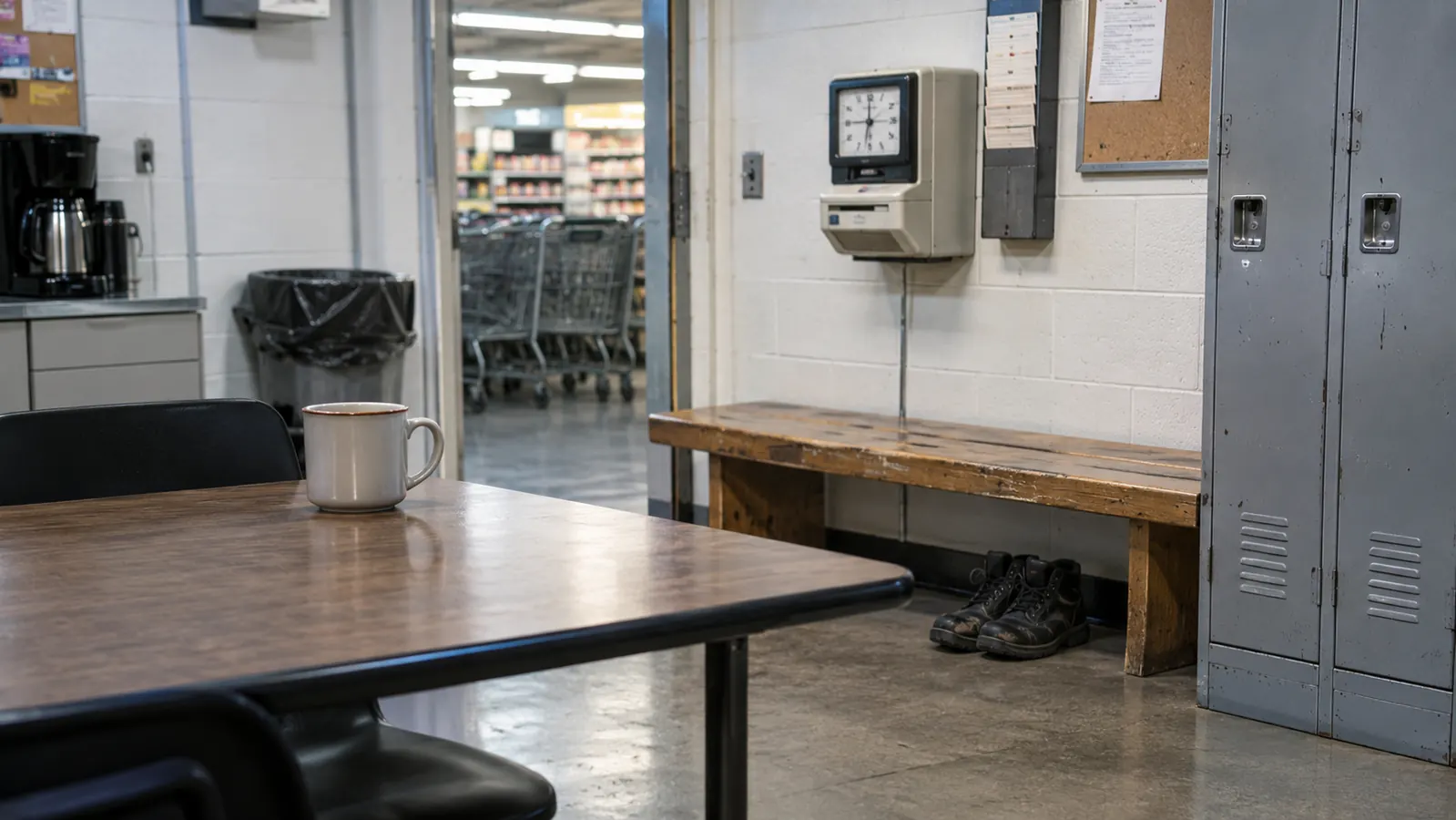
The floor in our store is sealed concrete. The deli has a rubber mat behind the counter, but the walk to the back room, the walk-in cooler, and the front end are all concrete. Ten hours on that floor is the test. A cushioned insole and a support insole fail in different ways. The cushioned one can go flat. The support one can feel like a rock. You want to know which failure you can live with.
I also paid attention to the small stuff. Did the insole slide when I pulled my foot out? Did it squeak on the tile? Did it hold odor after a double shift? Did it make my shoe tight across the top of my foot? Those are the things that make you stop wearing an insole, not the spec sheet.
Where Dr. Scholl's Wins
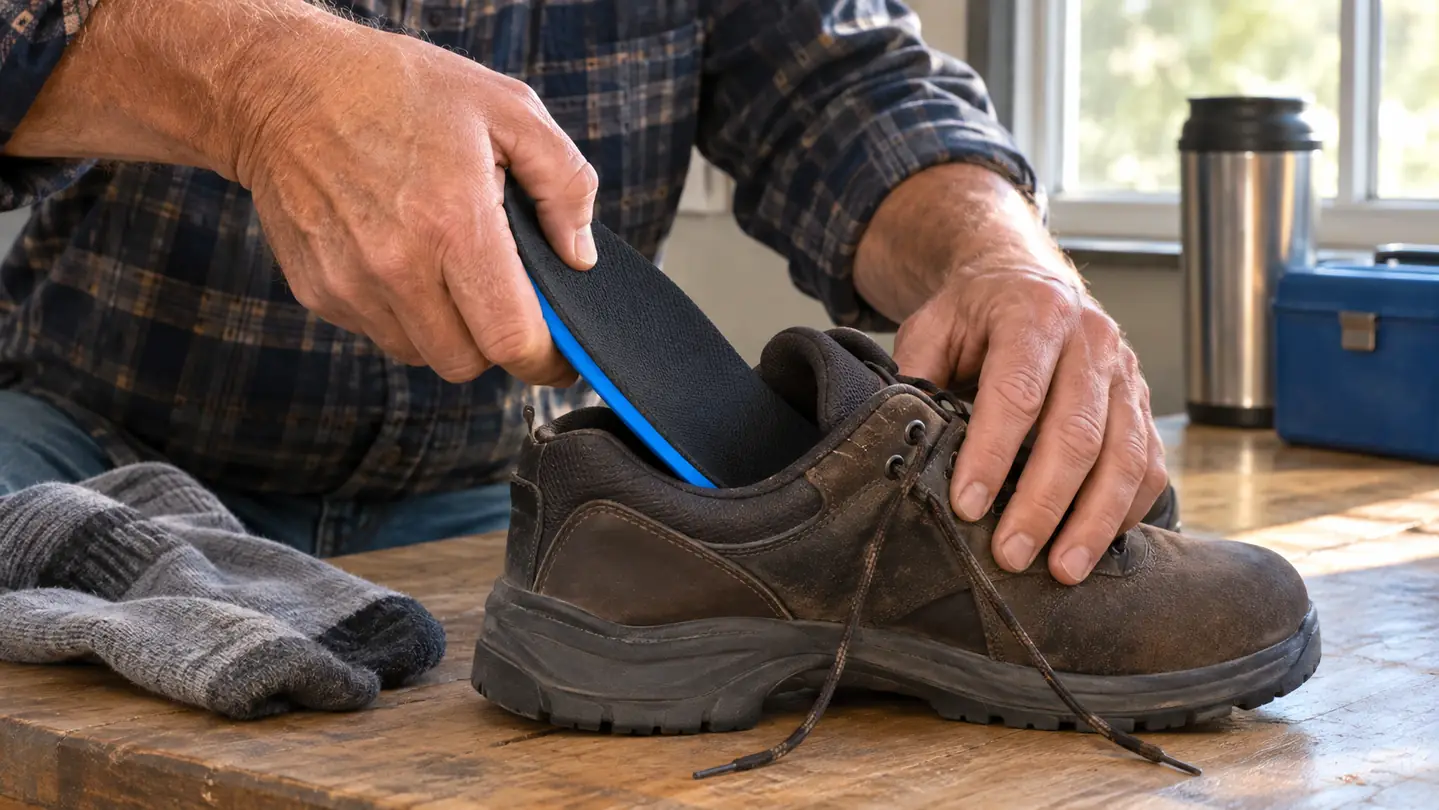
The first win is comfort from the first step. The Dr. Scholl's Work All-Day insole is a gel insole. The massaging gel is soft and giving under the heel and ball of the foot. I put a pair in on a Monday morning and forgot about them by the first coffee break. There was no break-in period, no hot spot, no moment where I wanted to take my shoe off under the counter. A lot of people buy a firmer insole, wear it for one shift, and never put it back in because it felt like standing on a board. This pair does not ask you to suffer first.
The second win is sweat and odor. The listing names Polygiene StayFresh technology, and I can tell you what that looked like in practice. My feet still got warm in the walk-in cooler and the dishroom, but the insole did not smell like a locker room by Friday. I air my shoes out anyway. The Dr. Scholl's pair dried faster than the stock insoles that came with my shoes, and it did not leave that sour smell in the shoe. That is not a small thing when you work next to people all day.
The third win is fit. It is trim to fit. I wear a women's 8.5 with a slightly wide forefoot. I pulled the stock insole out, set it on top of the Dr. Scholl's insole, and trimmed the toe with kitchen scissors. It dropped into both pairs of my work shoes without bunching. The gel layer did not change how the shoe laced. If you have a tight shoe, that matters more than arch height.
Where Superfeet Wins
Superfeet wins on structure. The pair I borrowed had a firmer arch and a deeper heel cup than the Dr. Scholl's insole. When I stood at the counter, I could feel the arch holding my midfoot instead of just cushioning it. If your feet ache because they are collapsing inward or because your arch is tired, that firmer shape can be the difference between a long shift and a long shift with a nagging ache. It is not soft. It is supportive. Those are different feelings.
Superfeet also wins on durability. The gel in the Dr. Scholl's insole is comfortable because it gives. That same give is why it compresses over time. After four months, my first pair had flattened under the heel, and I could feel the floor more at hour nine than I did at week two. The Superfeet pair I borrowed had been in the coworker's shoes for over a year and still had its shape. If you want one pair to last through a year of shifts, that is a real advantage.
The third win is a more locked-in feel. The deeper heel cup held my heel in place when I walked the back room. I did not feel like I was sliding around inside the shoe. For some people, that is worth the firmer ride. For me, it was a trade I noticed most on the walk to the time clock, not at the counter.
The Concrete Floor Test
The concrete is where the difference shows up. At the counter, both insoles feel fine. By the back room, the gel pair has a clear advantage because it is still giving under the heel. By the third trip to the walk-in cooler, the firm pair has a clear advantage because it is still holding the arch. That is the whole trade in one shift. Softness helps early. Structure helps late. Most people pick based on how the first hour feels, and most people are wrong about what they need by hour eight.
I had heel pain in my left foot a few years back that my doctor called plantar fasciitis. It settled down with stretching, better shoes, and rest. I am not going to tell you an insole fixed it, because it did not. What I can tell you is that a softer insole made the long shifts more bearable while I was rebuilding my tolerance, and a firmer insole felt better once my foot was calm and I wanted support instead of padding. Your foot may be in a different place.
Softness helps early. Structure helps late. Most people pick based on the first hour, and most people are wrong about what they need by hour eight.
Fit, Trim, and Shoe Room
The Dr. Scholl's pair is trim to fit, which is a polite way of saying you get one pair and a pair of scissors. I traced the stock insole, trimmed a little at a time, and checked the fit before I cut too much. The gel layer did not push my heel up or make the shoe tight across the top. If you wear a wide shoe or a work boot with a roomy toe box, you will not notice it. If you wear a snug sneaker, you will be glad it does not crowd your toes.
Superfeet comes in sized options, so you are less likely to cut wrong. The pair I borrowed had more volume under the heel. In my work shoes, that was fine. In a tighter pair, it would have been too much. That is not a knock on Superfeet. It is a reminder that an insole has to fit the shoe as well as the foot. A firm support insole in a shoe that is already tight is a bad combination, no matter how good the insole is.
Moisture, Odor, and the Walk-In Cooler
The walk-in cooler is the test for moisture. I go in and out of it all shift, and my feet go from warm to cold to warm again. The Dr. Scholl's pair handled that better than I expected. The Polygiene StayFresh treatment is not a magic shield. My feet still got damp on a busy Saturday. But the insole did not hold the dampness the way a foam insole does, and it did not smell by the end of the week. I still rotate my shoes. I still take the insoles out at night. That is just good practice.
The Superfeet pair did not have an odor treatment I could confirm. The coworker who lent them to me said he airs them out every night and replaces them when they start to smell. That is honest. It is also more work. If you sweat a lot and you do not want to think about your insoles, the Dr. Scholl's pair is the lower-maintenance choice.
If your feet are done by noon, start with the softer pair
The Dr. Scholl's Work All-Day insoles are trim to fit, gel cushioned, and treated for odor. They are the pair I hand to new hires who are not ready for a firm support insole.
Amazon Check Today's Price on Amazon →Who Should Buy Which
Buy the Dr. Scholl's Work All-Day insoles if you stand on concrete for long shifts, you want cushioning from day one, and you do not want to spend a week breaking in a firmer insole. They are also the better choice if your feet sweat, if your work shoes are on the snug side, or if you have a low arch and you want gentle support rather than a firm lift. They are the pair I recommend to new deli hires who are still figuring out what their feet need.
Buy Superfeet if you want a firmer arch, a deeper heel cup, and a more structured ride, and you are willing to trade some softness for it. They are the better choice if you have a higher arch, if your feet roll inward, or if you have worn out softer insoles and you want something that will hold its shape. They are also the better choice if you have already tried a gel insole and found it too squishy. Just give yourself a few short days to get used to them, and do not put them in a shoe that is already tight.
Start with the pair that does not need a break-in week
If you want cushioning, odor control, and a trim-to-fit insole that goes into your work shoes without a fight, the Dr. Scholl's Work All-Day pair is the one I keep coming back to.
Amazon Check Today's Price on Amazon →