A new pair of Dansko clogs is not comfortable on day one. Anyone who says otherwise either got lucky with the fit or has forgotten what week one actually felt like. Mine felt like two bricks with a band of stiff material laid across the top of the foot. The first pair I ever bought went straight onto my feet for a full ten-hour shift on sealed concrete, which is a mistake I have not repeated, and by two in the afternoon I had a hot spot on my right heel the size of a dime and a bad attitude to match.
Here is what nobody tells you about breaking in a stiff clog. It happens on the shoe's schedule, not yours. The upper has to soften and crease where your foot actually bends, and the cushioned footbed has to settle under your weight. You can nudge that along with a few small habits, or you can fight it for a month and collect blisters for your trouble. What follows is the plan I have used on my last several pairs of Dansko Professionals, and it is the same one I hand to new hires in the deli who show up on their first morning in shoes still in the box.
Get the Size Right First, Then Break Them In
Nothing on this page will rescue a pair that is the wrong size. Check the current sizing and today's price before you start the two-week plan.
Amazon Check Today's Price on Amazon →Step 1: Wear Them Around the House for Three Evenings
A new clog is stiff in two places. Across the top of the foot, and at the back where the upper meets the sole. Both spots need to flex and soften, and neither one softens much while you are sitting down.
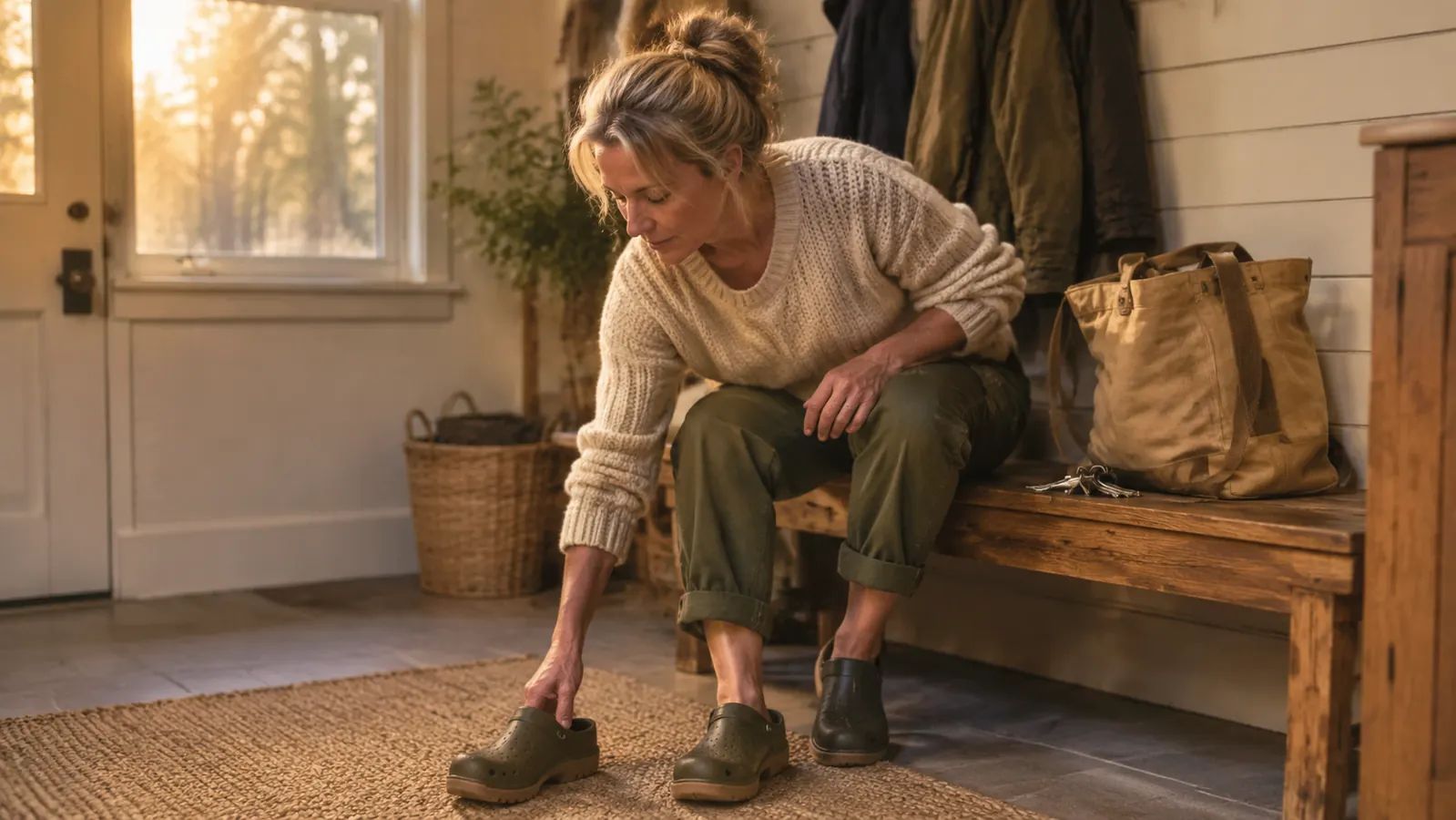
So wear them. At home. Two or three hours in the evening, with the socks you would normally wear to work. Cook dinner in them, stand at the counter, walk out to the mailbox and back. What you are doing is letting the upper warm up and start to fold where your foot bends, instead of where the factory guessed it would. You are also finding the two or three spots that are going to rub, while you are ten feet from a box of bandages instead of at the far end of a store with wet hands.
Here is what three evenings actually looked like for my last pair. Monday I wore them from the time I got home until supper was on the table, about two hours, and I could feel a hard line across the top of my right foot by the end of it. Tuesday I did the same thing plus the walk down the driveway for the mail, and the line was still there but it had moved back a quarter inch. Wednesday I cooked a full dinner and did the dishes in them, close to three hours of standing, and the spot that had been sharp on Monday was down to a dull pressure I could ignore.
I do this for three evenings before a new pair goes anywhere near the sales floor. It costs me about six hours of standing around my own kitchen. It saves me a week of walking funny and answering questions about why I am limping. If you take one thing off this page, take this one.
Step 2: Build Up in Two-Hour Blocks, Not Full Shifts
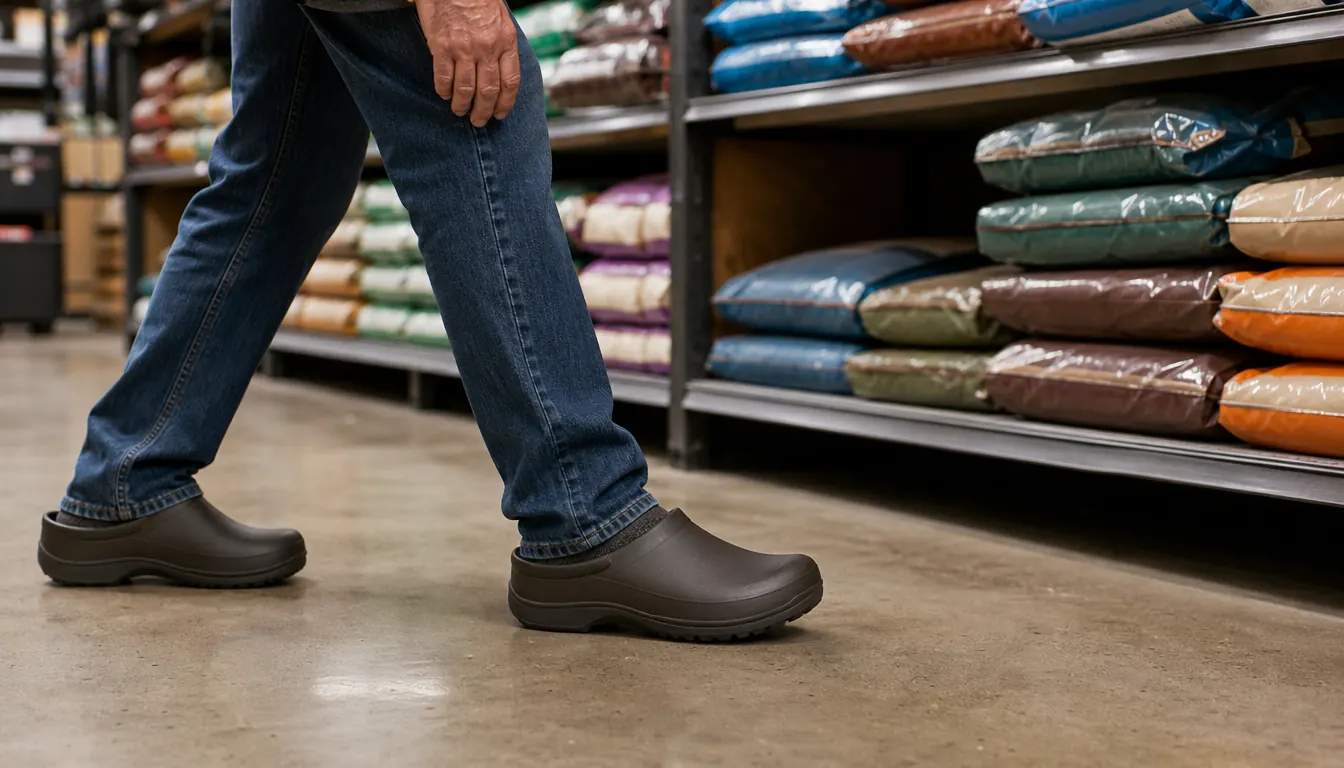
Feet swell. After ten hours standing on concrete they swell enough that a shoe which felt fine at 5:30 in the morning is snug by noon. A stiff new clog has no give in it yet, so a full shift in week one is exactly how blisters get started.
Two hours on, then off. Wear them for the drive in, the run to the store, the two hours of paperwork at the end of the night. Then switch back to your old shoes. Add an hour every second day.
There is a reason I use hours and not days. In week one of a new pair, my limit is four hours on the floor and no more. I learned that the hard way one Saturday when I wore a fresh pair through a shift that ran long because the truck was late and the relief baker called out. By hour seven the back of my left heel was on fire and I spent the next four days back in my old shoes with a bandage on it. Four hours on, four hours off, then six, then eight. That is the whole schedule, and it takes about ten days to walk it out.
By the end of week one I want a new pair handling four hours at a stretch. By the end of week two, a full shift. That is slower than you would like and about as fast as the shoe will go. Rushing it is how people decide Dansko clogs are too hard and go buy something with more padding and less support, then spend Thursday afternoon wondering why their legs are dragging.
Step 3: Deal With Heel Slip Before It Turns Into a Blister
A pull-on clog has no laces. The only things holding it on your foot are friction and the shape of the heel, and in a brand new pair the upper is still stiff enough that the heel lifts more than it will in a month. Some lift is normal and will settle. A lift that rubs is a blister with a schedule.
Let me be specific about what a hot spot feels like before it becomes a blister, because most people miss the window. It is not pain yet. It is warmth and a slight tackiness, like the sock has gone damp in one small spot. That is your cue. If you keep walking, the next stage is a raised red patch, and after that you are into a blister and every step for the next week reminds you of it. I check both heels with my thumb when I sit down for lunch. If a spot is warmer to the touch than the rest of the heel, the moleskin goes on before I stand back up.
Moleskin goes on the back of your heel, not inside the shoe. The patch takes the friction so your skin does not have to. A felt heel pad stuck inside the shoe does the same job and can come out once the upper softens. Thicker socks help more than either one, because they change where the rubbing lands in the first place.
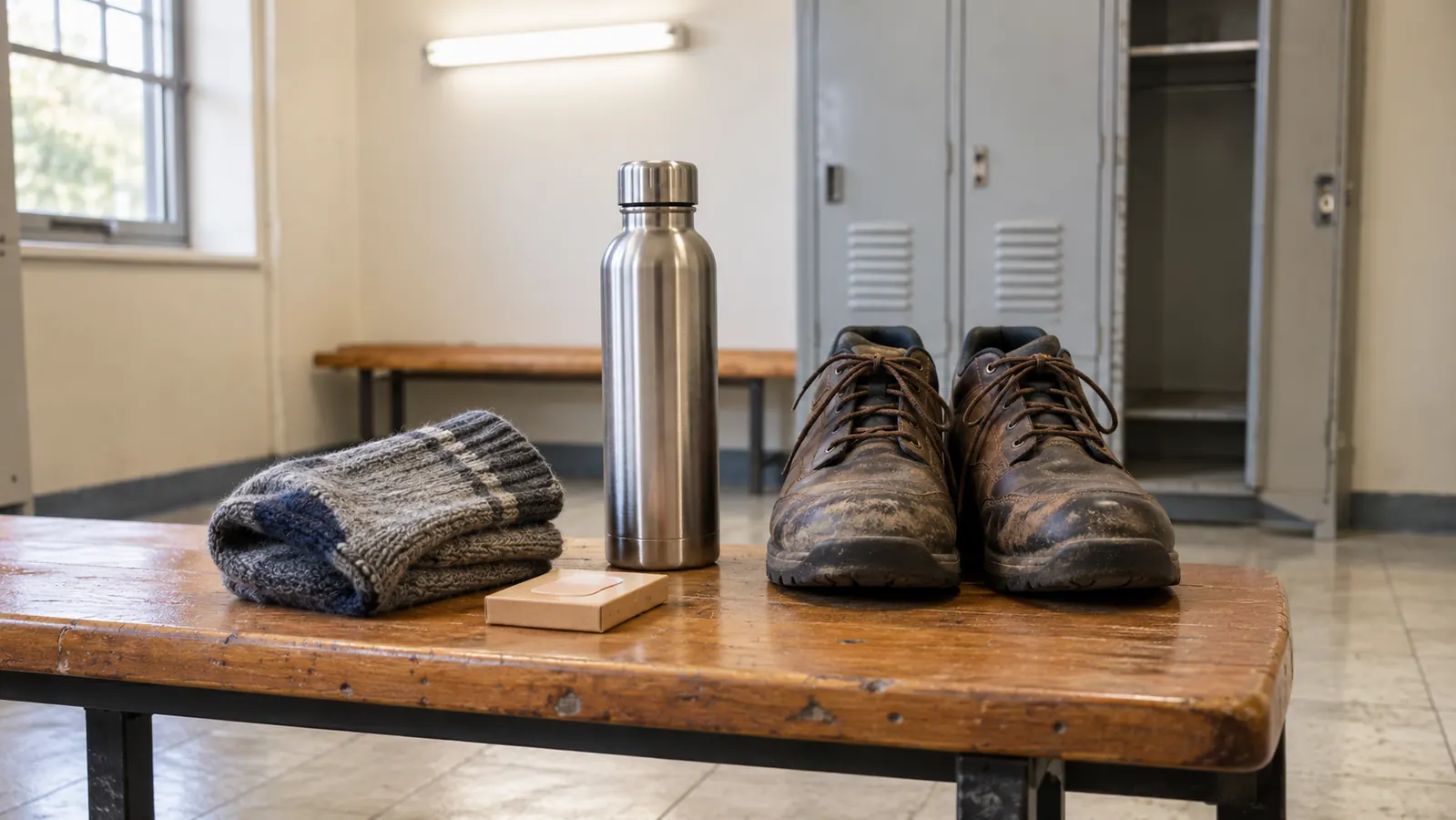
What you should not do is ignore a hot spot because you are busy. Ten minutes of attention at the first sign of warmth saves you two weeks of walking on the outside of your foot. I keep a strip of moleskin in my locker and another one in the glove box of the truck, and I have handed out more of it than I can count.
Three evenings in the house, ten days of short blocks, and a strip of moleskin on the heel. That is the entire method, and almost nobody does it.
Step 4: Change Your Socks at Lunch and Rotate Two Pairs
Wet skin blisters. Dry skin mostly does not. On a ten-hour shift the socks you put on at 5 in the morning are damp by noon whether you notice it or not. A dry pair at lunch is the cheapest item on this list and the one people skip.
I keep two pairs of work shoes and wear them on alternating days. That gives each pair a full day to dry out, which is the difference between a shoe that lasts two years and one that smells like a locker by March. If a second pair is not in the budget right now, at least let the pair you wore sit out overnight with the socks pulled out of them, somewhere with air moving.
This matters more than it sounds with a closed-toe clog. Air does not move through it the way it moves through a mesh sneaker, so whatever moisture goes in stays in until you take the shoe off. Dry socks and a day of rest between wears are how you keep that from turning into a problem you can smell from the doorway.
Step 5: Give It Two Full Weeks, Then Judge the Size
Two weeks of short blocks is enough to know whether the shoe is going to work. If the upper has softened, the heel has settled, and you can do a full shift without thinking about your feet, you are done. Keep the moleskin around for another week and get on with your life.
Here is the fit check I do at the end of the second week, and it takes about a minute. Stand up, then try to slide a finger down the back of the heel behind your own. If it goes in easily, the shoe is too big. If you cannot get a fingernail in, it is too small. Then walk ten steps and watch what your heel does. Some lift, a quarter inch or less, is fine. Anything more and the shoe is long for you. Finally, press your thumb down across the top of the foot where the upper crosses it. If you can feel the bone right under your thumb with no give at all, the shoe is shallow for your instep and no break-in period is going to change that.
If it still hurts in the same two spots after two weeks, the shoe is not breaking in. It is the wrong size or the wrong shape for your foot. The tells are specific. Your toes touch the front when you walk downhill. Your heel slides out with every step. Or you get a deep ache across the top of the foot where the upper presses down, which usually means the shoe is shallow for the height of your instep, and no amount of time will fix that.
I have a slightly wide forefoot, women's 8.5, and the size question is the one thing nobody can answer for you over the internet. Dansko does not fit like a running shoe and the numbering does not line up with what you wear in anything else. Try them on at the end of the day when your feet are at their biggest. If you are ordering online, order somewhere with easy returns and walk around on carpet first.
What Else Helps
Socks do most of the work. A thin dress sock in a new clog is asking for trouble. I wear a medium-weight wool blend year round, including July, and my feet come out of a shift drier than they did in cotton.
Trim your toenails the night before you wear a new pair, not the morning of. It sounds silly until you have spent ten hours with the end of a nail pressed against the front of a closed toe.
The Dansko Professional carries the APMA seal of acceptance, which means the association reviewed the shoe and how it is built. It does not mean the shoe will fit your particular foot. That is a separate question, and only you can answer it.
I have never had luck with the tricks people pass around, the ones involving heat, water or a freezer. Maybe they work on some shoes. On a shoe I need to last a year, I would rather spend the two weeks on short blocks than risk wrecking a pair I just bought. Time and body heat are slow, but they do not ruin anything.
And pick your week. Do not break in a new pair on the Monday you are training somebody, or during inventory, or the week your manager is on vacation. Pick ten days when a two-hour limit is actually possible, and let your old shoes carry the rest of the load until the new ones have earned their place.
Two Weeks From Now You Could Be Wearing Them Without Thinking
Same clog, same stiff first week, just handled in the right order. Start with the right size and today's price.
Amazon Check Today's Price on Amazon →