

I did not want to like these. That is the honest place to start. I have thrown out more insoles than I have worn out, most of them because they went flat by the second week, and one pair because it was so stiff my toes went numb before lunch. The Dr. Scholl's Work All-Day insoles sat in the box on my counter for nine days before I put them in a shoe. Then I wore them for ten-hour shifts, five days a week, on sealed concrete. Six weeks later I bought a second pair with my own money, which is not the same as saying they fixed anything. It is saying they earned a spot in the rotation, and I want to be clear about where the line is.
My feet are not interesting. Women's 8.5, a little wide across the forefoot, and a left heel that gave me trouble a few years back. My doctor called it plantar fasciitis and it settled down with stretching, rest and better shoes. I mention it so you know what I am working with, not because a piece of gel did anything about it. What is interesting is the floor. Sealed concrete on the sales floor, sealed concrete in the back room, a rubber mat over concrete in the walk-in cooler that is wet about half the time. Twenty-two years of that. Before these I tried the thin drugstore foam, a gel heel cup that slid forward in my shoe, and a firmer insert a coworker swore by that made my arch ache in a different, sharper way.
The Quick Verdict
Soft, genuinely comfortable underfoot for a full ten-hour shift, and honest about the fact that soft is not the same thing as supportive. Buy them for impact and end-of-day ache. Do not buy them expecting your arch to be held up.
Amazon Check Today's Price →Comfortable at 6 AM. Still comfortable at 4 PM. That is the whole pitch.
Trim to fit, one pair per box, gel with a Polygiene treatment for odor and moisture. If your shift is spent on a hard floor and your feet are done by mid-afternoon, this is the lowest-risk experiment I know of.
Amazon Check Today's Price on Amazon →What the Box Does Not Tell You
The listing gives you a fair amount and I will give it credit for that. Gel, shock absorption, arch support, a Polygiene StayFresh treatment for odor and moisture, and a claim about spreading foot pressure evenly to cut fatigue in your feet and legs so you can stay on them longer. What the box does not say out loud is that soft and supportive are two different jobs, and these do the first one well and the second one only partly. The gel compresses under your heel and the ball of your foot. That is exactly what takes the sting out of concrete. It is also why the arch support underneath feels like a suggestion rather than a shelf.
The second thing it does not tell you is volume. These are not thin. In my regular work shoes they were fine. In the tighter pair I keep for days I am mostly on the register, they lifted my heel enough that the shoe rubbed my ankle bone for about a week before it settled down. If your work shoes are already snug across the top of the foot, you are going to feel these there.
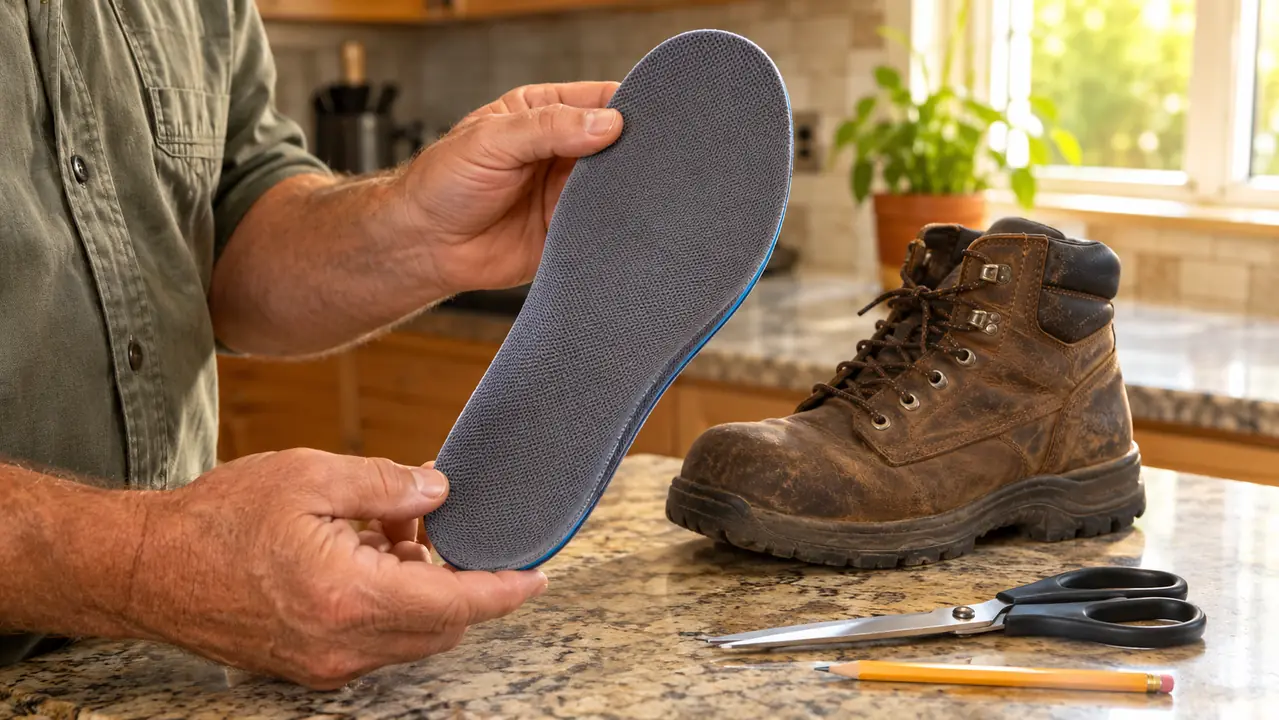
The third thing is the trim. Trim to fit means the size is whatever you make it, and you get one cut. The Dr. Scholl's instructions are printed on the back, but printed instructions and a sharp pair of scissors in bad kitchen light are two different experiences. I will walk through the method I use further down, because I got it wrong on an earlier pair of insoles and spent three months with a liner that crept toward my toes every time I walked.
How I've Used Them
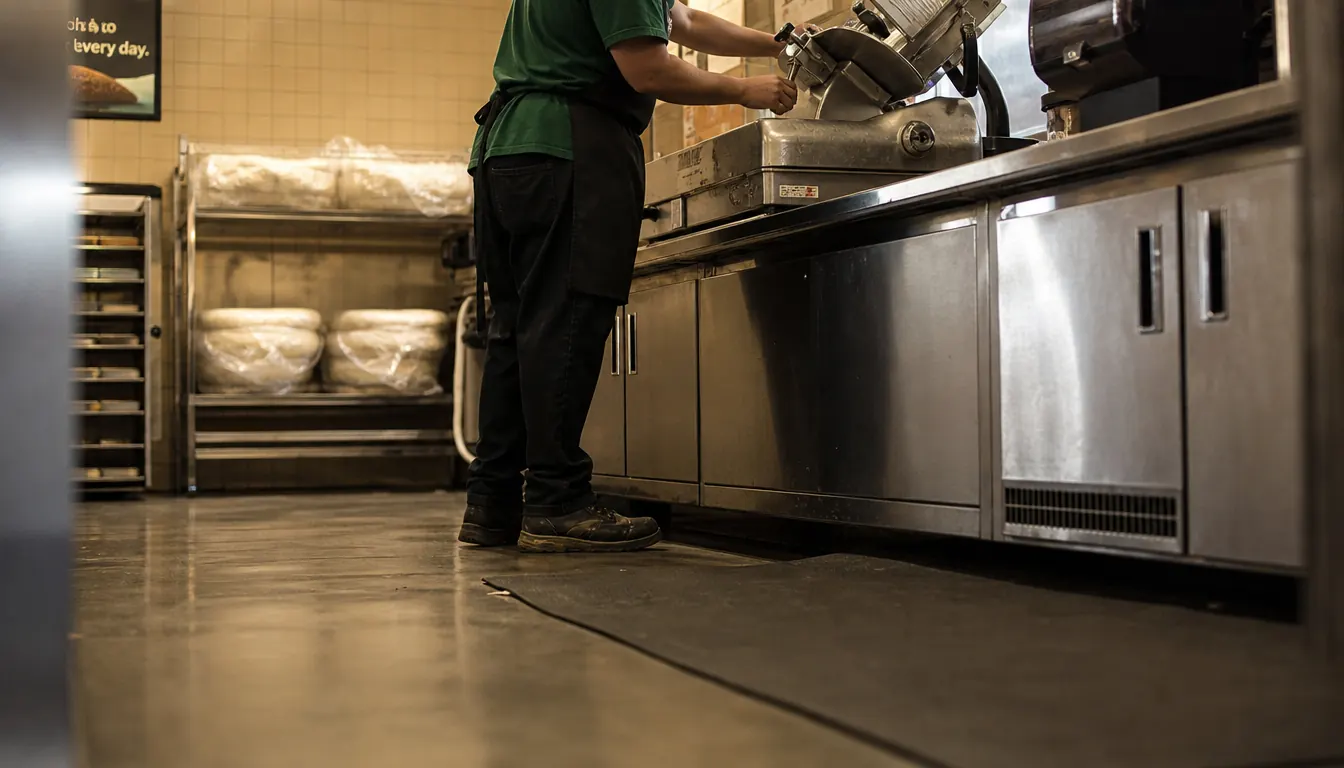
My shift starts at 5:30 in the morning and runs ten hours, five days a week. Deli and bakery. That is a lot of standing at the slicer, a lot of walking the sales floor, a lot of trips to the back room for cases of dough, and at least four trips into the cooler. I keep two pairs of work shoes and alternate days so each pair dries out. That is the single best thing I ever did for my feet and it costs nothing. For the first two weeks I put the insoles in only the left shoe of the rotation, so I could feel the difference against my own bare foot on the right side all day. That sounds like a fussy thing to do, and it is, but it told me more in ten days than a month of wearing both would have. By the Thursday of that first week I could name the moment the right foot started complaining: somewhere around 11:40, right after the lunch rush, when I had been standing at the slicer without a break since the doors opened. The left foot never announced itself at all. It was not that the left foot felt good. It was that it never got loud enough for me to notice, which on a ten-hour shift is roughly the same thing.
I wore them for six weeks before I wrote any of this. Not six days. The first three days of any gel insole are a completely different product than day twenty, and I was not going to review a break-in period and call it a verdict.
I also handed them around. Two coworkers. One is a night stocker, eight hours on his feet, mostly walking. The other decorates cakes and stands in one spot for almost her whole shift, and her foot is much narrower than mine. Both wore them for a week. A lot of what is below comes from them, because what worked on my foot did not work the same way on hers, and that difference is the most useful thing I can pass along.
The First Week Is Not the Real Test
Day one I was ready to be unimpressed. Gel insoles usually feel wonderful for about forty minutes and then turn into a warm pancake. These do soften and warm up, and by noon on the first day I could feel the heel area had taken the shape of my heel. That is normal for gel and it is not a defect. What surprised me is that it stayed there. Day two was better than day one. Day four was the first day I got to the end of a shift and realized I had not thought about my feet once, which is the highest compliment I can pay a piece of footwear.
Day nine is when the odor treatment came up, because that is about when I would normally start noticing something in a pair of insoles that lives inside a work shoe for ten hours a day. Nothing. Not a hint. I am not going to tell you these never smell, because they are still fabric over gel and they still live in a shoe. But the Polygiene treatment is doing a job, and it is doing it for longer than I expected it to. For context, I am not delicate about this. My work shoes live at the bottom of a locker and get worn ten hours a day, five days a week, and by week three a normal insole has a smell I can only describe as the inside of a cooler that got unplugged over a holiday weekend. These never got there. At week five I pulled them out to check the heel wear and put my nose right down into them expecting the worst, and they were fine. That is the least glamorous compliment in this article and probably the most useful one.
Day four was the first time I finished a ten-hour shift and realized I had not thought about my feet once. That is most of the review, really.
Where They Actually Earn Their Keep
The place these shine is standing. Not walking, standing. The cake decorator, who stands in one spot for most of her shift and has a narrow foot, came back after a week and said her heels felt better than they had in a year. That tracks with what the box claims about spreading pressure. When you stand still, your weight sits in two small spots, and the gel gives those two spots somewhere to go. Walking spreads the load on its own. Standing never does.
The second place is the last two hours. There is a specific kind of tired that shows up around hour eight, a deep ache through the arch and up into the shin, and with these in, that ache arrived later and lighter. Not gone. Later and lighter. I still come home and put my feet up. I just do it because it feels good instead of because I cannot stand.
The third place is cold floors. The cooler is the worst part of my day for feet, and a layer of gel between your foot and a cold concrete slab makes a real difference. That is not a claim from Dr. Scholl's. That is just physics and a 51-year-old woman who is tired of numb toes. There is a smaller version of it in the morning. The store is cold at 5:30, the concrete has had all night to pull the heat out of the building, and the first hour is the worst hour for feet. With the gel in, that first hour stopped being something I braced for. I noticed it on a Tuesday in the second week, when I walked in, hung up my coat and set the bakery case without once thinking about the floor.
Where They Come Up Short
Here is the part I would want a coworker to tell me in the break room. If your problem is that your arch collapses inward and your ankle rolls, these will not hold you. The gel is soft and the support underneath it is modest. On day three I did a full eight hours on the register, mostly standing still, and by the end my left arch felt tired in a way it does not in a firmer insert. That is not a flaw, it is the trade. You cannot get a soft cushion and a firm shelf out of the same half inch of material.
They also will not rescue a bad shoe. I tried them in a pair of cheap shoes I keep for yard work. Better than nothing, but the shoe still decided where my foot landed. If your work shoes are worn out at the heel or too narrow across the toes, fix that first. An insole is a layer, not a rebuild.
And they wear. Six weeks in, the top fabric at my heel is starting to look polished, which is what happens to anything under a heel that moves all day. I expect three to four months out of a pair with daily ten-hour use. That is about what I get from anything in this category. If you are expecting a year, you will be disappointed. One pair per box, so a year of use means buying more than one. The wear shows up in a specific order, in case you want to watch for it. Heel fabric first. Then the edge of the gel at the ball of the foot starts to curl up a little. Then the whole thing starts to feel thinner under the heel than it did in week one. When the thinning starts you have perhaps two or three more weeks of decent comfort, so order the next pair before you get there. I did not do that the first time and spent a week on a liner that felt like standing on a folded towel.
What I Liked
- Genuinely comfortable underfoot through a full ten-hour shift on concrete
- Arch and shin ache arrives later and lighter at the end of the day
- Odor and moisture control still holding up past the first week
- Trim to fit lets you size it to your own shoe instead of guessing
- Low risk to try if you have never worn an insole before
Where It Falls Short
- Soft gel compresses under the arch, so it will not hold a foot that rolls inward
- Adds noticeable volume inside a snug work shoe
- Top fabric at the heel shows wear within about six weeks
- One pair per box, so a two-shoe rotation means two boxes
- Trim to fit is a one-cut decision with no second chance
The Trim-to-Fit Step Nobody Warns You About
Pull the original liner out of your shoe, set it on top of the insole, and trace it. Not the other way around. The insole will be a little wider than the liner, which is what you want, because you are going to cut slightly inside your line and check the fit before you commit to anything. Cut a little, put it in the shoe, stand on it in your socks. If your toes are hanging over the front edge of the gel, take a bit more off the toe. If the heel is crowding the back of the shoe, take it off the back. What you should not do is cut the whole toe line off in one pass and hope.
This matters more than it sounds, because the arch support sits in one specific spot. Cut too much off the front and the whole insole slides forward, so the support ends up under the ball of your foot instead of your arch. That is uncomfortable in a way that takes an embarrassingly long time to figure out. Cut too much off the back and your heel hangs off the edge of the gel. Use sharp kitchen scissors, go slow, and cut the second insole to match the first one rather than measuring again.
Who This Is For
If you spend most of your shift standing in one place on a hard floor, and your complaint is general soreness and end-of-day ache rather than a specific structural problem, this is the pair I would hand you. Grocery, deli, kitchen, register, warehouse, salon floor. Anybody who sits down before they take their shoes off. The Dr. Scholl's insoles are built for that person. If you have a low arch and what you mostly want is cushioning with a little shaping underneath, the support here is enough. If you are like the cake decorator, narrow foot, standing in one spot all day, you may get more out of these than I did, because she clearly did.
Who Should Skip It
Skip these if your foot rolls inward and you need something that holds it, because soft gel does not do that job and no amount of trimming will change that. Skip them if you have already been fitted for orthotics or a prescription insert, since these are not a replacement and are not trying to be. Skip them if your work shoes are tight across the top of the foot, because the volume makes that worse. And skip them if you want one pair to last a year, because one pair will not. None of that is a knock on the product. It is just an honest description of what it is and what it is not.
Ten hours on concrete is a long time to feel every one of them.
Trim to fit, one pair per box, gel with a Polygiene treatment for odor and moisture. If you have been meaning to try an insole and every pair you have bought went flat in two weeks, start here.
Amazon See Today's Price on Amazon →